
Inclusive Leadership
Recommended course length: Half day (full day if including a facilitated discussion on making changes)
Overview
Change usually happens from the top down. If you want your organisation to be inclusive, diverse, and equitable, then the responsibility for making those changes – or acting on suggestions provided by staff, customers, or even consultants – is on you.
This course will explore how you can build EEDI into your organisation at multiple levels and create a welcoming, inclusive culture for all of your employees.
Topics Covered
- Understanding the sociopolitical context
- Understanding power imbalances
- Self-awareness and unconscious biases
- Seeking input and active listening
- Recruitment and promotion
- Setting goals
Course Outcomes
- Develop their personal understanding of themselves and their relationship to their staff
- Understand how their biases can affect the organisation and how they can reduce negative impacts
- Practice active listening and model inclusive leadership for others
In our experience working with a wide range of organisations, we’ve seen how leadership can either be a catalyst for genuine inclusion, or a barrier to it. Inclusive leadership isn’t just about having diverse teams or creating policies that look good on paper. It’s about the behaviour, mindset, and daily actions of those in senior roles who shape the workplace culture. Whether it’s within a school, a local authority, an NHS Trust or a growing private business, leadership and inclusion must go hand-in-hand if any real change is going to stick.
That’s why inclusive leadership training is such a critical part of what we offer. Through tailored coaching, sector-specific guidance, and real-world case studies, we help leaders understand how their decisions impact others, particularly those from underrepresented or marginalised groups. True inclusivity starts at the top, and without active, informed leadership, even the best-intentioned diversity policies can fall flat.
Get in Touch

What Is Inclusive Leadership?
Inclusive leadership means much more than being “supportive” or “open-minded”. It’s an ongoing commitment to recognise and address bias, ensure everyone has equitable access to opportunities, and create an environment where all voices are not just heard but genuinely valued. Leaders who practise inclusion are self-aware, emotionally intelligent, and willing to be challenged. They listen to feedback, adapt their approach, and work intentionally to build diverse, collaborative teams.
We find that inclusive leadership coaching often begins with reflection. Leaders are invited to consider whose perspectives they naturally listen to, whose contributions they may overlook, and what systems might unintentionally be excluding others. From there, we support them in building more inclusive habits, from running fairer meetings to making recruitment processes more accessible.


Why Inclusive Leadership Matters in the Workplace
Leadership sets the tone for any organisation. A manager’s behaviours and attitudes can influence everything from employee engagement to staff retention, mental wellbeing, and team cohesion. When leaders actively model inclusive values, it encourages others to do the same; helping to create a culture where everyone feels respected and able to contribute.
We’ve worked with senior leadership teams across the public and private sectors who’ve seen the difference inclusive leadership can make. It reduces conflict, increases psychological safety, and helps ensure that diverse perspectives are feeding into decision-making. This isn’t just good for morale, it’s good for performance too. Research from the Chartered Institute of Personnel and Development (CIPD) has shown that inclusive teams are more innovative and better at problem-solving.
Examples of Inclusive Leadership in Action
One of the most powerful parts of our inclusive leadership training is sharing real-world examples. We’ve seen leaders implement practical changes that have had a tangible impact. For instance, one NHS department we supported introduced structured team check-ins that gave quieter staff, including those with anxiety or who are neurodivergent, more space to share their views. Another organisation redesigned their feedback process to reduce unconscious bias, ensuring fairer recognition across teams.
Inclusive leadership doesn’t always require sweeping changes. Sometimes it’s about recognising the everyday moments where inclusion can be strengthened, like calling out microaggressions, giving credit fairly, or adapting communication styles to suit different needs. The most inclusive leaders are those who stay open to feedback and never assume they’ve “got it sorted”.


The Role of Training and Coaching
Inclusive leadership training isn’t just a one-off workshop. At its best, it’s part of a broader commitment to professional development and organisational culture. Our programmes are built around practical tools, self-reflection, and discussion. We focus on real challenges that leaders face, from handling resistance to inclusion efforts, to managing diverse teams with empathy and fairness.
What sets our approach apart is that it’s rooted in lived experience. Many of our trainers have first-hand insight into the barriers faced by underrepresented communities, and this brings depth and authenticity to every session. This is especially powerful during inclusive leadership coaching, where one-to-one sessions can be tailored to individual development goals and workplace realities.
We’ve also found that leadership and inclusion training works best when it’s embedded into wider organisational goals. That’s why we often work closely with HR teams, EDI leads, and Learning & Development managers to align leadership training with internal values, policies, and strategic objectives.
Tailored Support for Different Sectors
Inclusive leadership looks different in different settings. A headteacher might need to develop cultural competency to support an increasingly diverse student population. A commercial director might need to learn how to challenge bias in their recruitment process. An NHS Trust manager might need help creating psychologically safe environments for multidisciplinary teams.
That’s why our diversity and inclusion leadership training is never “off the shelf”. We tailor each programme to the organisation’s sector, workforce, and challenges. Whether in-person, online, or hybrid, we design sessions that are interactive, relevant, and engaging, helping leaders build practical skills they can use straight away.
This flexibility is particularly valued by our clients in education and healthcare, who often face resource pressures and time constraints. But it’s just as beneficial for commercial businesses looking to support staff wellbeing and embed inclusion into their growth strategies.
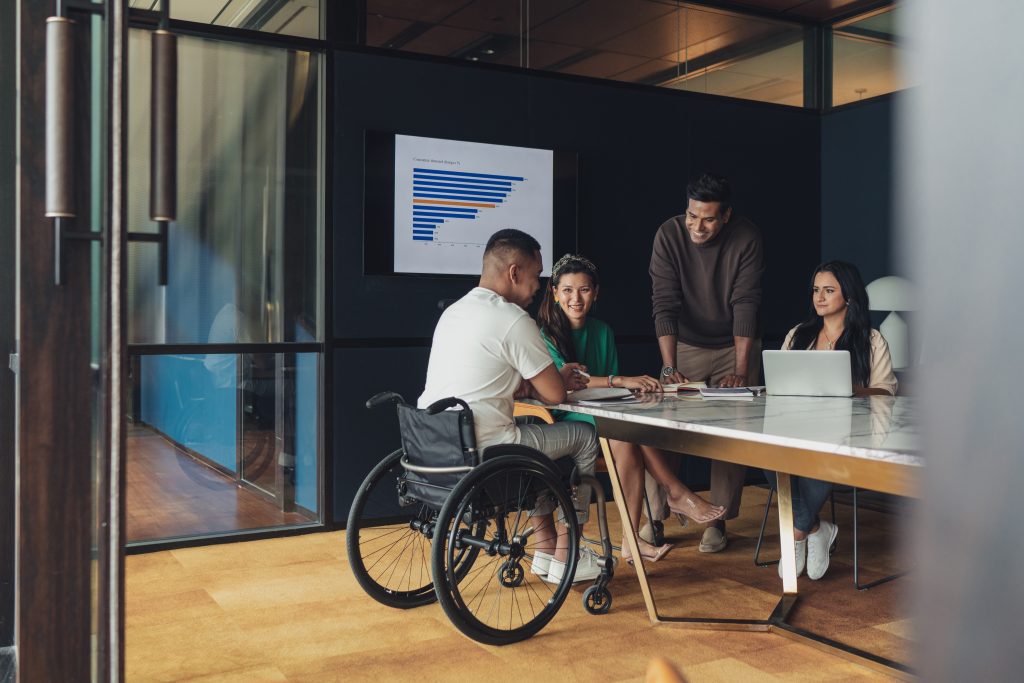
Making Inclusive Leadership Part of the Everyday
Inclusion doesn’t happen through policy alone. It becomes part of the culture when leaders commit to practising it consistently, openly, and with humility. We help organisations move beyond performative statements towards real, measurable action. And we support leaders in recognising that inclusive leadership isn’t about being perfect; it’s about being willing to learn, listen, and lead with integrity.
By investing in inclusive leadership training, organisations signal that they’re serious about change. It shows employees that inclusion isn’t a tick-box exercise, but a shared responsibility, one that starts at the top. From our experience, the most meaningful outcomes come when leadership development is paired with wider organisational reflection and support, such as Equality Impact Assessments or staff listening exercises.
If you’re looking to build stronger, more inclusive leadership within your organisation, we offer tailored support through inclusive leadership training, consultancy, and coaching. Whether you’re at the start of your journey or ready to deepen existing efforts, we can work with you to create lasting, positive change.
Explore Related Courses

Managing diverse teams

Intersectionality and data evaluation

Mentoring and reverse mentoring